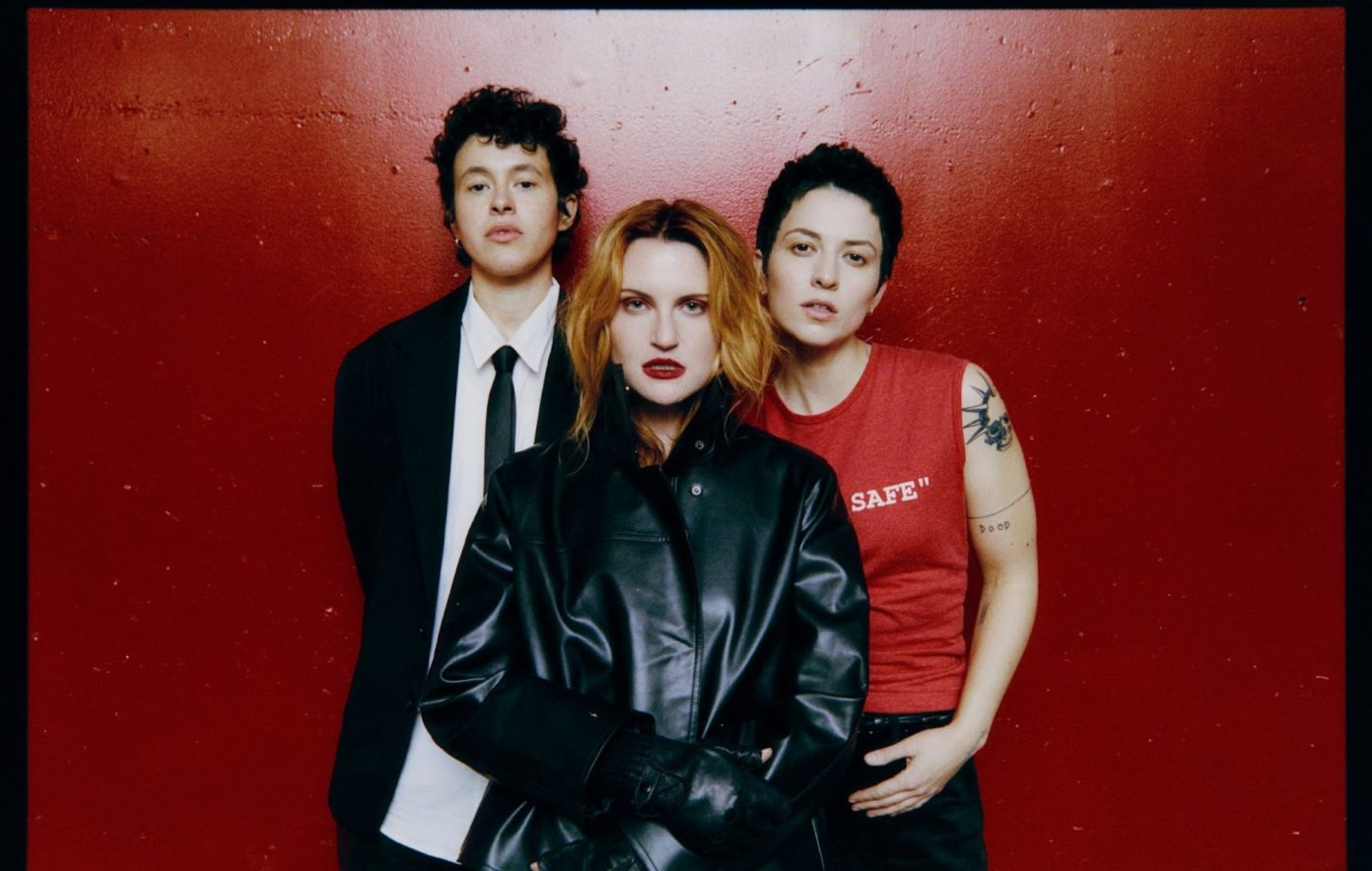
On their fourth album, the Los Angeles trio balance lightness and lust with a creeping sense of dread
MUNA have always thrived in the space between joy and heartbreak. While one of their biggest songs, Silk Chiffon, radiates carefree infatuation and shimmering pop energy, some of the trio’s strongest material has always leaned into emotional discomfort, fractured relationships, and the darker feelings hiding beneath the surface. One standout example remains 2017’s I Know A Place, written in the aftermath of the Pulse nightclub shooting. Even as it celebrates queer safety and togetherness, there is an unmistakable fragility running through it. Then there is Stayaway, a devastating breakup anthem where lead singer Katie Gavin painfully admits, “No one ever told me leaving was the easy part… I’ve gotta stay away.”
The band’s fourth album, Dancing On The Wall, produced by band member Naomi McPherson, continues that emotional balancing act. While the record bursts with euphoric moments and glossy melodies, it also reflects the tense political and social climate surrounding its release. Compared to their earlier projects, the album feels more anxious, sharper around the edges, and musically restless, blending touches of glam rock and alternative indie into the synth heavy pop sound that has long defined the group.
Even in its brighter moments, a sense of unease quietly hangs over the album. It Gets So Hot initially plays like a song about overwhelming desire, but the suffocating heat of Los Angeles gives it a much more claustrophobic atmosphere underneath. Mary Jane disguises themes of addiction and dependency beneath upbeat production, while So What masks heartbreak behind expensive parties, attention, and distractions. Katie Gavin sarcastically celebrates praise from strangers who claim to understand her, singing, “It’s our best work without you in it,” while the emptiness beneath the confidence slowly reveals itself.
At several points, Dancing On The Wall also becomes the band’s most openly political project to date. Rather than hinting vaguely at global issues, MUNA address them directly. On Big Stick, the group tells the story of a suburban woman living comfortably while contributing, knowingly or not, to systems built on violence and inequality. What begins as a calm and almost satirical reflection evolves into something far more confrontational. By the bridge, Gavin directly references America’s role in global conflict and the suffering of Palestinian children. The bluntness of the lyrics feels striking, particularly within modern pop music, where very few artists address these subjects so openly.
Although Dancing On The Wall explores heavier lyrical territory and experiments with rougher rock influenced textures, the album still remains rooted in the shimmering synthpop style MUNA have perfected over the years. Rather than completely reinventing themselves, the trio continue refining what they already do exceptionally well. In their case, consistency and emotional honesty feel just as powerful as dramatic transformation.




.png)