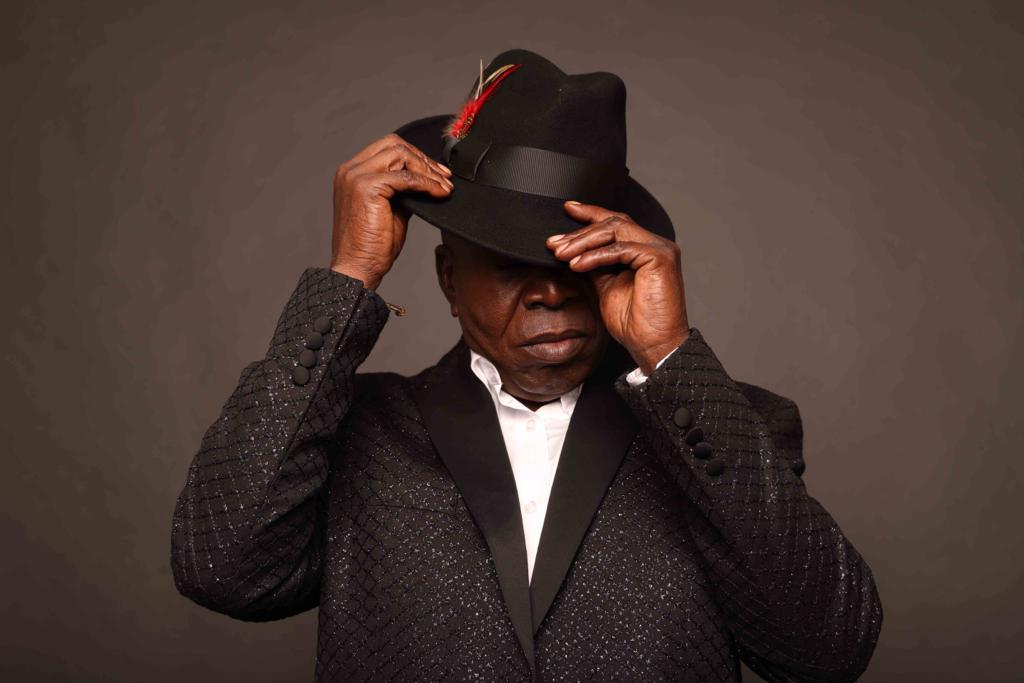
Reggae and dancehall icon Barrington Levy was just 14 years old when he started performing in local venues and talent shows around Jamaica and he was the same age when he released his hit single “Collie Weed” in 1978.
“As a kid coming up, I never knew the business side of the music business,” Levy says today. “I only know the music side of the music business. Somebody realized that I didn’t know that and then they carried me down in a big way by taking my product and selling it to other people. Producers, I’m talking about.”
More than four decades later, with a string of hit records and a dedicated fan base behind him, Levy is now fully educated on how things work in the music industry.
“What happened to me in the past will never happen to me again,” he declares. “Now I’m producing my own music. I’m the executive producer. I didn’t have those luxuries before.”
And Levy is still spreading wisdom and still singing about real life. His latest single, especially, is an example of what he’s learned on his journey; it opens with the words “I know, from a long time … money messing their mind.”
“Money Is The Drug” was released at the end of August and is part of Levy’s upcoming album, Life Love Humanity. He started working on the 12-track project early in 2023 and plans to release the album in the spring of 2024.
Ain’t no joke about it, you can’t live without it
Money is the drug, yeah, yeah
They’ll do anything, to get some more
Fight the fight, even go to war
They will steal, beg or borrow
They’ll sacrifice today to pay for it tomorrow
From “beggars on the sidewalk” to “brothers in the streets,” Levy sings that it’s money that’s messing with their minds. And money isn’t the solution everyone thinks it is, he says.
“You can see this poor guy and he’s praying everyday thinking of a way to get rich,” he says. “In his mind he think that life was not so good while he was poor. He’s climbing the ladder to get rich. When he reach there he realizes there’s a different problem come with being rich. Everybody is rich, they don’t have any problem, but that’s not true because people that is rich have some serious problem just the same as the people that is broke.
“You have rich problem, I have broke problem,” he says.
The new album is mostly on the spiritual side, according to Levy, who says he’s “on a spiritual journey at the moment.”
“I’m catering to everybody on this album,” he says. “I mean the dancehall, the reggae music. I’m staying in the lane.”
Levy clarifies, though, that his version of the genre should be spelled D-A-N-C-E-A-L-L.
“My one is danceall, intended for everybody,” he says. “It’s for everyone. Dance, come on all of you dance. That’s what it really means.”
Levy has released more than three dozen albums and compilations in his career, as well as a string of chart-topping hits like “Here I Come,” “Under Mi Sensi,” “Black Roses” and “Prison Oval Rock.” He became perhaps the biggest star in Jamaica during the 1980’s while proving himself one of the few DJ’s and vocalists with staying power.
Earlier this year, he was ranked No. 119 on Rolling Stone’s list of the 200 Greatest Singers of All Time, with the magazine likening his voice to an air horn: “In the four decades that followed, Levy’s class of dancehall brethren petered out. But somehow, Levy managed to keep that horn of his loud as hell, and very much in tune.”
In January he plans to release his next single, called “What Is For You On Earth, No One Can Take It.”


.png)