Was this performance all you hoped it would be?
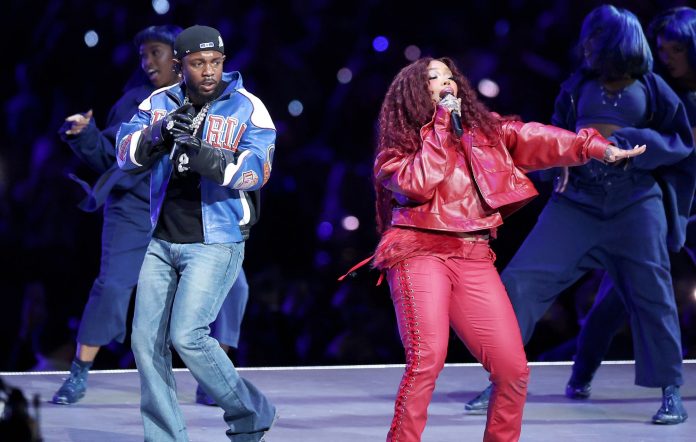
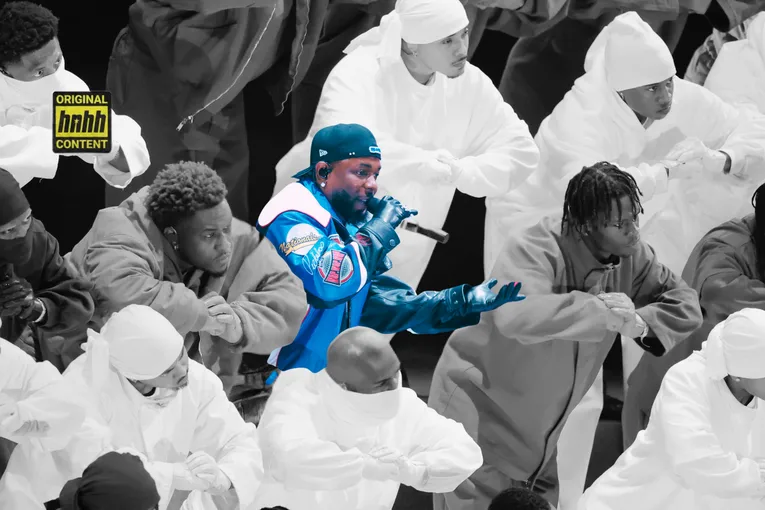
"The revolution will be televised, you picked the right time, but the wrong guy" might just sum up Kendrick Lamar and SZA's Super Bowl halftime show in a nutshell, whether in a positive or negative light. By now, you've probably seen all the glamorous praise and scathing critique thrown in the face of Sunday's (February 9) spectacle. Stans and cooler heads alike have a lot to say about K.Dot's messaging, stage setup, performance, and decisions, and while it definitely could've been better in our view, you can't say that it wasn't consistent with what the Compton lyricist previewed in both preceding press and throughout his killer catalog.
In fact, there are even amazing moments tied to this Super Bowl halftime show that go beyond Kendrick Lamar and SZA. Philly rapper and producer Ghais Guevara's "The Old Guard Is Dead" preluded and finalized the performance, and hearing the Goyard Ibn Said highlight was the most welcome surprise of the night. The heavy context of the world also shrouded the Caesars Superdome, whether it was the United States' newly elected and convicted president watching it all go down or the plight of the people of Palestine and Sudan. However, throughout the pgLang creative's slot, there were plenty of moments that seemed to engage with this contrast, bring hip-hop to a grand stage in the purest form possible, and have a whole lot of fun in the process.
Samuel L. Jackson As Uncle Sam & "The Great American Game"
Kendrick Lamar's Super Bowl halftime show began with Samuel L. Jackson as Uncle Sam, who introduced the crowd to "The Great American Game." Moreover, that idea came through in the stage design emulating the buttons on a PlayStation controller, which many interpreted as a symbol for the rap game or for life as a Black person in the United States. A row of street lamps adorned the space in between each of the four shapes, and dancers dressed in red, white, and blue to form the United States flag. They united, turned away from each other, dispersed, and came back together again, and many have debated just how intentional and pointed this choreography is. Nevertheless, it all works together to paint Kendrick's picture of the limitations that a system can place on his community, identity, and expression.
Seeing Uncle Sam in particular was an amazing moment for Kendrick Lamar fans, as it evoked the similar messaging on To Pimp A Butterfly that comments on the former TDE rapper's place as a Black man in the public eye. But now more than ever, Kendrick is in control. He makes sure to not just emulate his environment in the stage setup, but also show how he can shift from "too reckless" to "nice and calm." Maybe that's part of the problem that critics have with the performance, but one of the strengths behind it is a simple allegory that mostly seeks authenticity in hip-hop's presentation to the world. After all, this is the man who wants to watch the party die. As such, this nod to Mr. Morale's earlier catalog and its straightforward presentation is the kind of blunt force that we expected from this show.